Author: David Hermansen

  • What Is MetaTrader 5 and How to Use It?

    What Is MetaTrader 5 and How to Use It?

    Source: https://www.freepik.com/free-photo/trading-stock-stock-market-business-graph-trading-investment-broker-stock-exchange-market_410108431.htm 

    MetaTrader 5 is one of the most widely used trading platforms in the world. It is designed to give traders access to financial markets such as forex, commodities, indices and shares through a single, powerful interface. Whether you are new to trading or already have experience, understanding how MetaTrader 5 works can help you navigate the markets more effectively.

    This guide explains what MetaTrader 5 is, its main features, and how to use it step by step.

    What Is MetaTrader 5?

    MetaTrader 5, often referred to as MT5, is a multi-asset trading software developed by MetaQuotes. It is an upgraded version of MetaTrader 4, offering more advanced tools and additional market access.

    The MetaTrader 5 trading platform allows users to:

    • Analyse price charts
    • Place and manage trades
    • Use technical indicators
    • Access real-time market data
    • Automate trading strategies

    It is available on desktop, web and mobile devices, making it accessible from almost anywhere.

    Key Features of MetaTrader 5

    MT5 stands out because of its combination of analytical tools and execution capabilities.

    Advanced Charting Tools

    MT5 provides multiple chart types and timeframes, including:

    • One-minute charts for short-term analysis
    • Daily and weekly charts for longer-term trends

    Traders can apply dozens of built-in indicators such as moving averages, RSI (Relative Strength Index) and MACD (Moving Average Convergence Divergence).

    Multiple Order Types

    The platform supports various order types, including:

    • Market orders (executed immediately)
    • Pending orders (executed at a specified price)
    • Stop orders and limit orders

    This flexibility allows traders to plan entries and exits more precisely.

    Economic Calendar Integration

    MT5 includes an integrated economic calendar, showing upcoming events such as interest rate decisions and employment reports. These events often influence market volatility.

    Automated Trading

    MT5 supports automated trading through Expert Advisors (EAs). These are programs that can execute trades based on predefined rules, removing the need for manual intervention.

    How to Get Started With MetaTrader 5

    Before using MT5, you need to set up access through a regulated broker.

    Choose a Broker

    Select a broker that offers MT5 and operates under proper regulation. For example, FxPro is a reliable forex broker that provides access to MT5 along with a range of trading tools and support services.

    Open and Verify an Account

    You will need to:

    • Register your details
    • Verify your identity
    • Deposit funds (or open a demo account first)

    Using a demo account is recommended for beginners, as it allows you to practise without financial risk.

    Download and Install the Platform

    MT5 can be downloaded on:

    • Desktop (Windows or macOS)
    • Mobile devices (iOS and Android)
    • Web browsers (no download required)

    Once installed, you log in using the credentials provided by your broker.

    Understanding the MT5 Interface

    When you open MT5, you will see several key sections.

    Market Watch

    This panel displays available trading instruments and their live prices. You can right-click to add or remove symbols.

    Chart Window

    The chart window shows price movements for a selected instrument. You can customise it by:

    • Changing timeframes
    • Adding indicators
    • Drawing trendlines

    Toolbox

    The toolbox contains:

    • Open trades
    • Account balance and equity
    • Trade history
    • Alerts

    This is where you monitor your positions and performance.

    How to Place a Trade on MT5

    Placing a trade is straightforward once you understand the process.

    Step 1: Select an Instrument

    Choose a currency pair or asset from the Market Watch window, for example EUR/USD.

    Step 2: Open the Order Window

    Right-click the instrument and select “New Order”, or click the “New Order” button at the top.

    Step 3: Set Trade Parameters

    In the order window, you can define:

    • Trade volume (lot size)
    • Stop-loss level
    • Take-profit level

    Step 4: Execute the Trade

    Click “Buy” if you expect the price to rise or “Sell” if you expect it to fall.

    Once executed, the trade appears in the toolbox, where you can monitor and manage it.

    Using Indicators and Analysis Tools

    MT5 offers a wide range of analytical tools.

    Adding Indicators

    You can add indicators by:

    1. Clicking “Insert”
    2. Selecting “Indicators”
    3. Choosing the desired tool

    For example, adding a moving average can help identify trends, while RSI can indicate overbought or oversold conditions.

    Drawing Tools

    MT5 allows you to draw:

    • Trendlines
    • Support and resistance levels
    • Channels

    These tools help visualise market structure and potential entry points.

    Risk Management in MT5

    Using MT5 effectively also means managing risk carefully.

    Stop-Loss and Take-Profit

    Always set a stop-loss to limit potential losses and a take-profit to lock in gains at predefined levels.

    Position Monitoring

    Regularly check your open trades and margin levels to avoid unexpected losses, especially during volatile market conditions.

    Practical Example

    Suppose you analyse GBP/USD and notice an upward trend supported by economic data. You decide to place a buy trade at 1.2700 with a stop-loss at 1.2650 and a take-profit at 1.2800.

    Using MT5, you enter these parameters in the order window and execute the trade. The platform then tracks your position in real time, allowing you to adjust levels if needed.

    Final Thoughts

    MetaTrader 5 is a powerful and flexible trading platform suitable for a wide range of users. It combines advanced charting, multiple order types and automated trading capabilities in one interface.

    By learning how to navigate its features, apply analysis tools and manage risk effectively, traders can use MT5 as a structured environment for participating in financial markets. Like any trading tool, its effectiveness depends on how responsibly and consistently it is used.

  • A 4-Step Strategy for Using AI Image Generators in Marketing

    A 4-Step Strategy for Using AI Image Generators in Marketing

    A Simple Guide on Using AI Image Generators in Marketing Projects

    From catchy taglines in newspapers to attention-grabbing commercials aired on television to social media ads, marketing can now reach billions of people worldwide. While this is undoubtedly a great thing, it has also increased the demand for visual content across channels. The pressure on teams to produce more in less time has never been higher—and if you work in marketing (otherwise, you wouldn’t have landed here), you know how daunting that can feel.

    AI image generators are certainly a time- and effort-saving tool. They help teams create engaging content that captures attention and drives action. And while marketing experts have their preferences regarding tools—some stick to field-proven platforms like DepositPhotos by VistaPrint, while others switch apps occasionally—the more important question is: “How do you use one in a marketing project?” This article provides AI-driven use cases in marketing and a simple, practical strategy for integrating an AI-image generator into an ad campaign. 

    5 strengths of generative AI in marketing

    • High-volume production. GenAI tools let teams scale visual output across channels without expanding headcount or timelines.
    • Rapid experimentation. AI platforms help test angles, styles, and concepts before committing budget to full production.
    • Consistent brand identity. Generative models can follow brand colors, tone, and stylistic rules, reducing off-brand outputs.
    • Built-in personalization. AI tools adapt visuals to different audience segments, making targeting more efficient and scalable.
    • Operational efficiency. AI reduces reliance on repeated design revisions and supports both quality and output, according to many marketing specialists.

    5 AI-driven use cases in marketing

    • Social media campaigns. AI tools produce platform-specific visuals for posts, stories, carousels, and paid ads with minimal turnaround.
    • Product visualization. Teams generate mockups, lifestyle scenes, or seasonal product variants without additional setups.
    • Email marketing. Generative visuals can be tailored to specific goals, helping improve open rates and click-through rates.
    • SEO-supported content. AI tools create contextual images, comparisons, diagrams, or supporting graphics that increase dwell time and relevance.
    • Segment-specific assets. Marketing teams build visual variations that match different personas, behaviors, or campaign tiers.

    An exemplary step-by-step guide to using AI image generators in marketing projects

    Step #1. Define the exact visual requirement

    Many businesses report that AI can significantly improve marketing ROI, but a disciplined, step-by-step process is essential to turn it into measurable results. Before using AI to generate images, you need a campaign draft so you know what to focus on in an asset—including the subject and environment. You should also consider the ideal framing and orientation to support any text-based components. 

    Your visual requirement may not produce a ready-to-use image right away, but it will give you a good starting point. Imagine your campaign revolves around your product—a designer wooden desk. How do you use AI to create a relevant image? Your prompt might look like this: “A lifestyle shot of a coffee mug on a wooden desk, morning light, shallow depth of field.” Then, experiment with phrasing and the order of details to ensure your product stays center stage. This step isn’t meant to produce the final version—it’s meant to generate direction before you build a creative brief.

    Step #2. Build a focused, creative brief

    Once you’ve defined your visual requirements, move on to a focused creative brief. This includes outlining style, mood, color palette, brand rules, and any reference or example imagery—which is especially useful if the tool supports reference uploads. If you’re wondering what AI can generate images from reference photos, DepositPhotos is one example. In addition to reference uploads, the AI Image Generator lets you choose aspect ratio, style, and prompt inspiration. The output typically includes multiple options so you can select the one that best aligns with your campaign. 

    Think of your brief as a blueprint for consistent prompting—one that keeps the AI true to your brand components, rather than generating random or “close enough” visuals. Along with structuring your prompt in a clear priority order (elements mentioned first typically carry more weight), consider using negative prompting. This technique helps you steer the model away from unwanted results by specifying what not to include.

    For example, your default prompt could look like: “A minimalist flat-lay of a skin cream bottle on a soft beige fabric background, natural morning light, subtle shadows, clean aesthetic, brand-inspired color accents in light peach.” In turn, a negative AI prompt example for this image would be: “No hands, no clutter, no text, no bright colors, no reflections, no harsh shadows, no glossy surfaces.”

    Step #3. Create multiple versions and test them

    Creating a few versions based on the same idea can help you land the option that best fits your upcoming campaign. Try adjusting wording, fine-tuning style descriptions, and experimenting with angles and details to explore the range—without going overboard.

    Swapping adjectives from softer to stronger (and vice versa) will help you generate meaningful variations. Then, evaluate the set and note which options feel closest to your intended brand voice and style. 

    Once you have three to five variations, test them using dark posts (also known as unpublished ads). These allow you to display multiple image options to a small, targeted audience (you can integrate an AI image generator into your CRM for this purpose) without affecting your live feed or cluttering your main campaign timeline. Dark-post testing gives you the closest thing to a real-world response. It helps you determine which visual actually stops the scroll, attract attention, or earn early engagement—and which ones look good in theory but fall flat in practice. 

    Step #4. Integrate the winner into your content pipeline

    How often you decide to use an AI-generated image depends on testing. Once a variation proves itself, it’s best not to treat it as a one-off asset, but as a building block within your broader content engine. Store it, tag it, and document it (brief used, prompt wording, negative prompts, notes on what worked) in your library. 

    The point here is long-term value. If an image performs well, you can reuse it in retargeting, resize it for other placements, or adapt the original prompt to generate a future series that aligns with your brand.

    Bottom line

    Multiple use cases of AI image generators prove their marketing efficiency. With a mindful strategy, your efforts can yield strong results—not only in crisp images, but also in higher engagement and stronger sales. The best part is that this can work long-term. You don’t need to fall into the trap of diving into image generation from scratch every time a new campaign appears on the horizon. Your images have strong potential for repurposing and reposting.

  • XS Review 2026: Is XS.com a Safe, Secure & Regulated Broker?

    What’s the first thing that you are thinking about if you want to start your journey with trading? Chances are high that safety is among the top factors you are considering when deciding whether starting to trade is a good idea. If that sounds like you, we must congratulate you, as you have taken a proactive approach, which increases the chances of staying safe. Trading is increasing in popularity, especially since many people from countries worldwide are dealing with high inflation and currency devaluation, which is making them search for more ways to preserve the value of their money.

    Innocent people have understood the power of trading, but also cybercriminals, who are using trading as a way to steal money. So, you were right to have worries when trading. This means that you need to pay attention to the security of the platform you decide to begin your journey on. So, let’s start by offering you a helping hand, so that you can choose the right platform. We can start by taking a look at the leader in trading, represented by the XS forex broker.

    Is XS indeed a safe broker, or only a scam in disguise? Let’s delve right into this topic.

    XS Ltd (XS.com) Overview

    If we were to go on a past journey in 2010, in Australia, we could witness the initial steps of the XS CFD broker in the adventure of becoming a worldwide leader. 

    Now, XS has the title of a Global Multi-Asset Broker after receiving reward after reward. Like all paths towards success, its journey wasn’t always linear. As it shouldn’t, as the top businesses are the ones that have known how to adapt and constantly improve themselves. The good news is that XS is part of this category.

    XS wants to help traders in their journey by unlocking their full potential. This is not done by guaranteeing  100% of success all of a sudden, but by offering the notions traders need. This is the best way to ensure that users are prepared to navigate volatility and whatever the trading space might throw their way.

    XS is also committed to always improving its services and helping traders of all levels achieve financial empowerment.

    XS Safety & Regulation

    When making a division between XS as a scam or a trustworthy broker, we must pay attention to the safety features of this platform. 

    This is the area that will tell the most whether we are dealing with something real or fake. And XS excels in this category, as it has adopted various practices that offer safe solutions. Here are some of them.

    Insurance

    The insurance offered by the Civil Liability Insurance Program given by XS proves that this platform is not a scam. Otherwise, why would it give something to users in case they are dealing with errors, scams, negligence, or fraud? Yes, you read that well, as if you are the victim of one of the above scenarios, you need to know that you can get back the money you lost. This offers high protection and is a green flag, showing that XS is a safe broker and not a scam.

    Keeping the company funds in segregated accounts

    To ensure nothing bad occurs, the company’s funds must be kept in segregated accounts. You might be wondering why this is the case. Well, there were many situations when big companies have been hacked. And to prevent the money of customers from being lost forever, they are better off being more proactive by keeping accounts separate. 

    As XS has claimed to be reputable and the broker leader, it must adopt this approach to be able to remain at the top. Otherwise, the downfall might be imminent, as a data breach or other hacks can compromise its reputation forever.

    Having various regulations

    For a company to demonstrate its fairness, it must have regulations from financial authorities. And XS is offering this status, especially since it has jurisdictions in plenty of parts around the world. Here are a few of the financial authorities overseeing XS’s activities.

    • The Financial Services Authority of Seychelles
    • The Australian Securities and Investments Commission (ASIC)
    • The Cyprus Securities and Exchange Commission (CySEC)
    • The Financial Services Authority of Labuan (LFSA)
    • The Financial Sector Conduct Authority (FSCA)
    • The Financial Services Commission of Mauritius (FSC)
    • The Securities and Commodities Authority (SCA)
    • The regulatory authorities from the State of Kuwait.

    Advanced security standards

    To be able to meet advanced security standards, XS needs the right infrastructure. As a result, it has sought ways to achieve this via various sources, including employing advanced security infrastructure and other robust protocols. In this way, the information and funds of users remain safe.

    XS understands the importance of data protection, especially created to keep scams and other dangers at bay. If the XS team notices some dangers in the online payment activities, they do what it takes to protect the assets of users and respond promptly before the danger turns into something bigger.

    Also, hackers can be after the accounts of users from XS. But to ensure that XS comes in their way, this company has set in place strong password requirements, which follow a length criterion, to include more complexity. Changes in the personal information must also occur after the verification that the person in charge is indeed the one who has initiated this action.

    XS.com as a multi-asset broker

    XS is a multi-asset broker that allows traders to have access to various assets. This is a great advantage, as it provides the possibility of diversification. Diversification is important in trading, as in this way, you can reduce risks. Why? Because you don’t have all the funds in one asset, this means that if one is not performing the way you envision, the other might. So, in moments of financial uncertainty, things can return to your favor.

    Additionally, in this way, you can better discover the trading strategy that works best for you. The asset classes you can choose from on XS involve shares, indices, forex, metals, futures, energy, and crypto. Each of them comes with its own unique perks and challenges, so you must understand how they work, and then the choice of your solution will come naturally.

    XS’s resources

    Understanding all the ins and outs of the trading market is not the easiest path, and it comes after spending much time researching the market. However, XS has set its mission to increase the speed of this journey, using various tools. In this way, users will truly have what they need for a great experience. Plus, as a beginner, it is normal to deal with some errors. Unfortunately, they will impact the results of your trades.

    But with the help of the XS AI Insights, you have the right helper by your side, which is meant to aid you in making more informed decisions. AI Insights is a yes if you are looking for hidden growth opportunities in trading, better identification of entry and exit points, and removing the chances of costly mistakes. Especially for beginners, AI Insights can truly be what sets their trades towards a more successful journey.

    Other than this, you might think that you would need to spend a huge amount of money to enhance your information about trading. Well, you might if you weren’t to consider XS. 

    At XS, you can access a variety of completely free courses. The topic spans numerous important subjects in trading, including risk management, technical analysis, market fundamentals, and trading psychology. And for a course that is 100% free, the value of the notions you will get is worth it.

    What about XS complaints?

    If you have an XS complaint, you can address it directly with this company and let them find ways to resolve your problem. You can send the complaint via email, in which case you will need to describe the entire problem. Don’t forget to include relevant information, such as the order and account numbers, along with a detailed explanation of the issue encountered.

    Even though XS comments are usually positive, each person’s experience is unique, and it is good that XS provides something to help if you ever need it.

    Is XS a safe broker?

    Yes, XS is a safe and reliable broker, not a scam, as shown by the title XS has achieved as a leader in trading. The safety features that XS has considered also make it continue to represent a secure solution. Additionally, XS has won numerous awards over the years, which attest to the reliability of this platform.

  • A Small Danish Factory Maker Found a Way to Survive Globalization. The Answer Was to Go Global.

    When customers told Henrik Hagens his company would be shut out of the Chinese market, he did something bold: he built a factory there.

    STØVRING, Denmark — The call came during the financial crisis, when most manufacturers were cutting costs, not adding them. A major customer had a blunt message for Henrik Hagens, the owner of Hagens A/S, a spring and metal parts manufacturer tucked away in a small northern Danish town: open a factory in China, or lose the business.

    It sounded like a trap. Building a factory from scratch on the other side of the world would cost millions, and this was 2008 — not the moment most executives were eager to gamble.

    But then more customers said the same thing. China’s government, they warned, was preparing to prioritize domestic suppliers in its next five-year plan. The window was closing.

    “We weren’t completely sure,” Hagens recalls, “but when you’re talking about a five-year plan in China, they carry it out.”

    He built the factory.

    A different kind of globalization

    That decision marked the beginning of a geographic expansion that has since carried Hagens A/S — a supplier of precision springs and metal components to the automotive, medical, industrial and agricultural sectors — into Sweden, Hungary and southern Denmark, in addition to its original base in Støvring and a facility in Glostrup.

    The strategy has produced consistent multi-million kroner profits at a time when European manufacturers have struggled to compete with lower-cost producers in Asia. The company now employs roughly 100 people in Denmark and 245 worldwide, and Hagens says he hopes to reach half a billion Danish kroner in annual turnover within a few years.

    The formula is less about scale than it is about positioning. Rather than competing on price — a race Hagens says European manufacturers cannot win — the company has deliberately pushed toward high-value, high-quality products that require the kind of precision tolerances the automotive industry demands.

    “If we had only competed on price, we would have been pushed out of the market within a few years,” he says.

    The local presence strategy

    What makes Hagens’ approach distinctive is the discipline behind its acquisitions. Rather than buying large or ambitious targets, the company focuses on acquiring well-run factories, typically with around 50 employees, that can be quickly integrated and are close to what Hagens already knows how to do.

    “We don’t experiment,” Hagens says. “Companies have to be able to stand on their own feet, and we have to know both the products and the customer types. Otherwise the integration becomes too heavy.”. Especially when it comes to niche productions like clockwork springs, and other custom types of springs.

    The Chinese factory was an exception — it had to be built from scratch because no suitable acquisition was available at the time — but it also gave the company something valuable: full control over quality and manufacturing standards in a market where cutting corners is common. That control has helped Hagens establish a foothold in China’s fast-growing automotive and medical sectors.

    Watching for signals

    Hagens describes himself as a kind of global merchant, constantly reading the signals of where markets are opening and where they are closing.

    His attention has turned to the United States, which he considers attractive because of the size of its domestic market. But he has pressed pause for now. The political climate, and the uncertainty around trade policy, has made the ground feel unsteady.

    “The market is attractive,” he says, “but we need to know the rules of the game before we invest.”

    He is watching other shifts too. Europe, he argues, can neither match Asian wage levels nor protect its industry through political means the way China does. China itself is growing more expensive as wages rise. India, he says, is positioning itself as the next global manufacturing hub.

    “India wants to be the world’s factory after China. If that happens, the balance will shift again.”

    For European manufacturers, he believes automation is the only durable response — though at Hagens, it has not come at the expense of jobs. Employment has grown alongside the machines.

    “We have to keep growing,” he says, “but not at any price. We have to make money every year.”

  • Prediction Market Platforms: The Next Frontier in Financial and Sports Speculation?

    Prediction Market Platforms: The Next Frontier in Financial and Sports Speculation?

    Image by Jakub Zerdzicki from Pexels.

    Prediction markets work like financial exchanges for future events. Instead of trading stocks or commodities, people trade contracts whose value depends on whether an event happens. They buy and sell contracts whose prices reflect collective expectations about real-world outcomes.

    These contracts are priced to reflect participants’ beliefs about the likelihood of a particular event occurring. So, if a majority of people believe an event is likely, they will buy contracts that cover that outcome. This drives its price higher. An example of this is people using platforms such as PredictIt to buy contracts on potential US election outcomes. The popularity of these platforms demonstrates how this model is evolving into a hybrid system that blends elements of finance, information markets, and speculation.

    A Hybrid Between Fintech Innovation and Event-Driven Trading

    Prediction markets function similarly to financial exchanges. The major players in the industry, such as Kalshi and Polymarket, structure tradeable contracts that involve a Yes/No question about a future event, for example, “Will the Seattle Seahawks win the NFL?” In this situation, yes-or-no contracts exist, each typically settling at $1 if correct and $0 if incorrect.

    The price of a contract reflects the perceived probability of the situation occurring. So, a price of $0.68 reflects a perceived probability of 68%. Participants trade based on information, analysis, and sentiment. They can enter and exit positions until the outcome of an event is known.

     This structure resembles derivatives or options markets, where traders speculate on future conditions rather than owning the underlying asset.

    Information Aggregation Mechanisms

    In academic research, prediction markets are often described as information aggregation mechanisms. As such, experts have long argued that these markets can be better predictors than polls or expert forecasts. This idea relates to the concept of the “wisdom of crowds,” popularized by James Surowiecki.

    Surowiecki’s theory suggests that aggregating individual estimates means that any errors are cancelled out. This, in turn, provides superior outcomes in forecasting and decision-making.

    In addition, research in Behavioral Economics suggests that markets incentivize individuals to reveal information, and any new information causes prices to change rapidly. This high volume of real-time information is a major reason why many people believe the markets outperform individual thoughts and decisions.

    Why Sports and Events Are Natural Entry Points

    Sports outcomes are particularly well-suited to prediction markets because events occur frequently and outcomes are easily measured. Sports events are also widely followed. According to the S&P Global Market Intelligence Kagan US first-quarter 2025 Consumer Insights survey, nearly three-quarters of adults surveyed in the US watch sports, with most watching at least one of the top four sports leagues: the NFL, MLB, NBA, and NHL.

    The outcomes of sporting events are also resolved quickly, which makes them ideal for event-driven trading environments. In this sense, prediction markets are similar to sports betting, but with a structural difference: traders interact with market prices rather than fixed bookmaker odds.

    Regulatory and Financial Evolution

    The biggest barrier to mainstream adoption of prediction markets remains regulation. In the United States, platforms like Kalshi operate under oversight from the Commodity Futures Trading Commission, framing event contracts as financial derivatives rather than wagers. Decentralized platforms such as Polymarket operate using blockchain infrastructure, pushing the model toward decentralized finance (DeFi). The tension between financial innovation and gambling regulation, when predictions involve sporting event outcomes, will likely shape the industry’s future.

    If regulatory acceptance expands, prediction markets could evolve into a new category of financial products. Rather than replacing gambling or traditional finance, they may sit between them, creating a market where information itself becomes the tradable asset.

  • Which Brokers Offer the Highest Leverage for Forex and CFDs?

    Leverage is one of those ideas that seems easy to understand until you try to use it. In its simplest form, it lets you control a bigger position in the market than your actual money would let you. With a $1,000 account and a broker that offers 1:500 leverage, you can open positions worth up to $500,000. The potential gains scale accordingly – but so do the losses. This dual nature is why leverage is simultaneously one of the most attractive features of retail trading and one of the most misunderstood.

    The question of which brokers offer the highest leverage is genuinely complex, because the answer depends heavily on where the broker is regulated, which instruments you’re trading, and your own classification as a client. A broker operating under a major regulatory body like the FCA or ESMA is restricted to much lower leverage caps than one regulated in, say, the Seychelles or Vanuatu. Platforms like PU Prime, which operate under offshore licensing structures that permit higher leverage ratios, often attract traders looking for more flexibility in how they size their positions – the key is understanding exactly what that flexibility comes with in terms of risk exposure and client protection. The governing setting is not merely a bureaucratic detail. It defines what happens to your funds if something goes wrong.

    What CFDs are and why leverage matters for them

    A CFD Broker doesn’t actually sell you the underlying asset – it offers you a contract that mirrors the price movement of that asset, whether it’s a currency pair, a stock index, a commodity, or a cryptocurrency. You agree to exchange the difference in price from the point you open the trade to the point you close it. Should the price shift in your favor, you gain. If it moves against you, you cover the difference. This structure makes CFDs inherently flexible, since you can go long or short without owning anything physical, and they’re available on thousands of instruments through a single account.

    The reason leverage is particularly relevant in CFD trading is that many of the most popular instruments – major forex pairs, for example – move in very small increments on any given day. A EUR/USD pair might move 0.5% in a session. Without leverage, that’s a modest return on capital. With 1:200 leverage, that same 0.5% move becomes a 100% gain on your margin – or a 100% loss if the market moves against you. This is the fundamental arithmetic that makes leverage both powerful and dangerous.

    How leverage limits vary by regulation and instrument

    Here’s a simplified breakdown of how maximum leverage typically varies across regulatory environments and asset classes:

    Regulatory jurisdictionForex major pairsStock indicesCommoditiesCryptocurrencies
    EU / EEA (ESMA rules)1:301:201:101:2
    UK (FCA rules)1:301:201:101:2
    Australia (ASIC rules)1:301:201:101:2
    Offshore jurisdictionsUp to 1:2000Up to 1:500Up to 1:500Up to 1:100

    The difference between regulated and offshore environments is stark. European retail traders are capped at 1:30 on major forex pairs – a deliberate consumer protection measure introduced after research showed that the vast majority of retail traders using high leverage were losing money. Offshore brokers face no such mandate, which is why they can and do offer leverage ratios that would be illegal to advertise in the EU or UK.

    What traders should actually consider before chasing maximum leverage

    The instinct to seek out the highest available leverage is understandable, especially for traders who are confident in their strategy and want to maximise capital efficiency. But there are practical considerations that often get overlooked in that calculation. The first is margin call risk. High leverage means your position can be closed out by a small adverse move before you’ve had a chance to reassess the situation or add more margin. A 1:500 position on EUR/USD requires only a 0.2% move against you to wipe out your entire margin. In a volatile session, during a news release or a sudden liquidity gap, that can happen in minutes – sometimes faster than any alert system can notify you.

    The second is the quality of execution. When brokers offer very high leverage, they may make up for it by having wider spreads, slower execution, or pricing that isn’t as clear. The headline leverage number is only one part of the cost structure – it’s worth examining what you’re actually paying per trade at the execution level. The third consideration is fund security. Offshore brokers have fewer rules about separating client money, setting up compensation plans, and settling disputes. For traders who keep larger amounts on account, this is a meaningful risk that leverage ratios don’t reflect. The right approach isn’t necessarily to find the broker with the highest available leverage. It’s to find the broker whose overall structure – execution quality, fee transparency, fund security, and available instruments – genuinely fits your actual trading strategy and risk tolerance. Leverage is a tool, and like most tools, its value depends entirely on how it’s used.

  • 10 Signs Your Company Has Outgrown Spreadsheets in Financial Planning

    Most organizations do not replace their financial planning process overnight. The change typically begins with small, repeated inconveniences. 

    For example, a report might take longer than expected, a number may look different across two meetings, or a manager might approve spending before the finance team has checked the impact.

    In the early days of a business, spreadsheets are usually sufficient for planning. Teams are smaller, assumptions remain stable, and people are comfortable communicating directly. 

    However, as operations expand, leaders often start looking for financial planning software that can ease their financial planning and help the business grow swiftly. This change is not because they want new technology, but because the planning routine no longer matches how decisions are actually made. 

    That said, below are the ten signs that indicate a business has outgrown spreadsheets in financial planning. Read on to see if these signs apply to your business as well.

    1. Monthly Reports Arrive After Decisions Are Made

    Reports should help managers act. But when they arrive late, they only explain what already happened. Teams can review them carefully, but cannot change the outcome.

    Over time, reporting becomes informational rather than practical due to delayed monthly reports.

    2. Teams Discuss Numbers Before They Discuss Actions

    Meetings start with a comparison of figures from different departments. Sales, operations, and finance bring separate totals, and the conversation focuses on determining which one is correct. By the time an agreement is reached, there is little time left for planning.

    3. Updating a Forecast Requires Rebuilding Files

    Updating projections should be simple. But when it requires copying spreadsheets, fixing formulas, and rebuilding summaries, teams delay the update. The forecast stays the same, not because the business is stable, but because changing it takes too long.

    4. Budgets Are Reviewed After Spending Occurs

    Managers handle urgent needs first and justify them later, and the plan records activity instead of guiding it. When this happens, employees begin to see the budget as a reporting document rather than a working tool.

    5. Finance Team Spends More Time Gathering Than Interpreting

    Collecting numbers from multiple departments consumes most of the month. And by the time information is ready, attention has already shifted to the next issue. In simple terms, insight arrives too late to influence behavior.

    6. Small Adjustments Create Large Disruptions

    Changing a single assumption forces updates across many files. Furthermore, people hesitate to share the numbers and keep rechecking the totals because they’re afraid an error might show up. Also, teams avoid trying different scenarios because even small changes can disrupt the sheets.

    7. Managers Keep Personal Tracking Sheets

    Department leaders maintain private spreadsheets to stay confident in their decisions. While this practice is understandable, these versions gradually replace the shared view of company performance. Eventually, alignment weakens because everyone trusts different data.

    8. Growth Makes Planning Slower

    As the organization expands, coordination becomes more time-consuming. Approvals multiply, and timelines stretch. The business grows larger, yet clarity decreases because planning cannot keep pace.

    9. Review Meetings Focus on Explaining Variances

    Regular discussions concentrate on why targets were missed rather than what actions should follow. You notice that the organization has become skilled at explanation instead of preparation.

    10. Decisions Depend More on Judgment Than Data

    Leaders rely on judgment because available figures feel outdated. Experience fills the gap left by delayed information. This works temporarily, but it becomes risky as conditions change faster.

    What Do These Patterns Reveal?

    Each of these signs points to the same issue: planning and operations have drifted apart. The company still prepares a plan, but daily choices do not rely on it.

    This stage often appears during growth. More products, customers, and teams increase the need for coordination. A method designed for a smaller organization struggles, not because it is incorrect, but because the environment has changed.

    When planning reflects current activity, conversations improve quickly. Meetings shorten because numbers are trusted, adjustments happen earlier, and teams spend less time confirming the past and more time discussing next steps.

    Managers also gain confidence. Instead of waiting for monthly reviews, they can act, knowing the plan reflects present conditions.

    Why Recognizing These Signs Matters

    Companies sometimes neglect these symptoms for years because each one does not seem critical on its own. A delayed report or repeated clarification seems manageable. However, together, these signs gradually reduce decision quality.

    The purpose of planning is not only control but also coordination. When departments work from consistent, current information, actions align naturally. When they do not, each team optimizes locally, and the organization loses direction. Recognizing the shift early helps restore planning to its intended role.

    Final Thoughts

    Businesses rarely outgrow spreadsheets suddenly. The change appears through delays, repeated explanations, and decisions made outside the plan. These patterns show that the process designed for earlier stages no longer fits daily operations.

    When planning stays close to ongoing activity, it becomes useful again. This helps teams respond to the present rather than relying on assumptions formed months earlier.

  • Key Due Diligence Steps for Evaluating 1031 Exchange Opportunities

    For real estate investors, the 1031 exchange is an excellent way to preserve wealth. That said, the 45-day identification deadline imposed by the IRS often makes investors rush. They may end up skipping due diligence and closing acquisitions as quickly as possible. This rushed approach creates unnecessary risks, and properties often become poor investments. If you’re looking to do a 1031 exchange, here are the due diligence steps you cannot miss.

    Assess the Market Conditions 

    Staying on top of the current market is foundational to choosing the right 1031 exchange properties. This includes assessing the local and national market conditions, such as:

    • Vacancy rates
    • Buying patterns
    • Rental trends
    • Surrounding infrastructure developments 

    Once you review these, you will have a clearer understanding of the properties’ value and be able to choose one with the potential for long-term profitability.

    Work With Reputable, Qualified Intermediaries 

    Qualified intermediaries (QIs) are integral to any 1031 exchange. They manage exchange documents and logistics to ensure the transaction qualifies for tax deferral. Investors must work with a QI that places the sale proceeds in a separate account and handles all legal documentation to maintain the tax-deferred status. This is why investors must work with trusted QIs who have a stellar market reputation and deep expertise in executing 1031 exchanges.

    Verify Property Financials Thoroughly

    Income potential is typically the primary factor driving investment decisions. Therefore, look beyond the property brochure to understand its actual income capability. Scrutinize the essentials, such as:

    • Current Rent Rolls: These can help you understand the payment history, occupancy levels, and lease expiration timelines. If multiple leases expire simultaneously, you may face cash flow disruptions during those transition periods.
    • Tenant Quality: Evaluating tenant creditworthiness is a must in 1031 exchanges, especially for retail and commercial properties. This helps you determine whether tenants can reliably fulfill long-term lease obligations or if you should look elsewhere. 
    • Operating Expenses: Sellers often understate maintenance costs to show an attractive Net Operating Income (NOI) to investors. Hence, when reviewing properties, compare the seller’s reported numbers against current industry benchmarks. Consider realistic numbers for insurance premiums, taxes, and utilities to make a well-informed decision. 

    Compare Different Property Types for Risk-Reward Assessments

    Different property types have varying potential for generating income, market appreciation, and overall stability. For instance, a commercial property may have a higher income potential but also tends to have higher vacancy rates. Residential properties tend to provide more stable income, though they may offer lower overall returns.

    When you compare various properties, you get a much better picture of the risks and rewards associated with each. This way, you can pick properties that are best suited to your risk tolerance and investment objectives. 

    Run an In-Depth Property Inspection

    A thorough inspection of the exchange property is also important. Its physical condition determines whether you see favorable returns or drain capital on unexpected repairs. More importantly, a thorough inspection will help you spot problems before the acquisition and avoid unexpected capital expenses afterward. 

    Ideally, investors should engage licensed inspectors for a proper inspection. With their expertise, thoroughly review HVAC systems, wiring, structural integrity, plumbing, and roofing. A professional inspection also means you can easily identify underlying problems, such as building code violations and environmental hazards, and save yourself from hassles down the road. 

    Review Documentation and Titles

    A thorough documentation review is also important for a successful 1031 exchange. Therefore, include the property’s financial paperwork in your review process. Look for settlement statements, purchase agreements, rental agreements, and property appraisals. 

    Since the transaction is a like-kind exchange, a smooth title transition is equally important. Before you invest, review the property titles and look for any encroachments or easements that could restrict use or complicate a future sale. 

    In Conclusion 

    Yes, 1031 exchanges are very beneficial for real estate investors. However, they can become complex without proper preparation and understanding. Due diligence helps you avoid ambiguity and run a comprehensive assessment of an exchange property. Once you have a complete picture of the property’s overall condition, making the right decision becomes easier. 

  • Building Equity the Right Way: Financing Strategies for Home Buyers

    Purchasing a home is a significant milestone, and for many, it represents the largest financial commitment they’ll ever make. While the decision to buy a home involves careful thought and consideration, understanding how to build equity the right way is just as crucial. Equity plays a vital role in your financial future and can be the key to unlocking opportunities such as refinancing or securing loans for other investments. However, building equity doesn’t happen overnight. It requires smart financial planning, strategic choices, and a long-term approach to your mortgage.

    In this article, we’ll walk you through key financing strategies that will help home buyers build equity effectively. Whether you’re a first-time buyer or an experienced homeowner, these strategies can guide you in making informed decisions that promote long-term financial stability.

    What is Home Equity?

    Before we dive into strategies, it’s important to define home equity. Simply put, home equity is the difference between the current market value of your property and the remaining balance on your mortgage. As you pay down your mortgage or your home’s value increases, your equity grows. Building home equity is one of the main advantages of owning a home, as it provides you with financial leverage for future needs like borrowing for education, business ventures, or retirement.

    1. Choose the Right Mortgage Plan

    When it comes to building equity, the type of mortgage you choose plays a significant role. The two most common mortgage plans are fixed-rate and adjustable-rate mortgages (ARM). Each comes with its own set of benefits and drawbacks, so it’s essential to choose one that aligns with your financial situation.

    Fixed-Rate Mortgages

    A fixed-rate mortgage is a popular choice among home buyers, especially those who want stability. With this type of mortgage, your interest rate stays the same throughout the life of the loan, which means your monthly payments won’t fluctuate. This predictability is ideal for budgeting and planning long-term.

    Building equity is more straightforward with fixed-rate mortgages because you’ll be consistently paying down both the principal and the interest. Additionally, over time, as you pay down the principal, your equity increases, giving you greater control over your home’s financial value.

    Adjustable-Rate Mortgages (ARM)

    On the other hand, an ARM offers lower initial interest rates that can adjust over time, typically after a few years. While ARMs can make homeownership more affordable in the early stages, they come with the risk of rising payments in the future. If you plan to stay in your home for a long time, the potential for higher payments can be a concern when your rate adjusts.

    However, an ARM could be a good option if you plan to sell or refinance your home before the interest rate increases significantly. In this case, you can still build equity in the initial years when payments are lower. But, it’s crucial to weigh the risks and benefits before committing to an ARM.

    2. Make Extra Payments Towards the Principal

    One of the most effective ways to build equity quickly is by making extra payments towards the principal of your mortgage. While your standard mortgage payments typically go towards both the principal and interest, any additional payments you make directly reduce the amount you owe, which, in turn, boosts your equity.

    Benefits of Extra Payments

    By paying down your principal faster, you will reduce the total interest you pay over the life of the loan. This means more of your money goes toward building equity rather than paying off interest. Even small additional payments can add up over time, significantly accelerating the growth of your equity.

    How to Make Extra Payments

    You can make extra payments in various ways:

    • Make bi-weekly payments: Instead of making monthly payments, consider paying half of your mortgage every two weeks. This method results in one extra payment per year, reducing the principal balance and helping you pay off your mortgage faster.
    • Lump-sum payments: If you receive a tax refund, bonus, or other windfall, you can apply a lump-sum payment directly to the principal. Even one extra payment each year can reduce your mortgage balance considerably.

    Before making extra payments, it’s important to check with your lender to ensure there are no prepayment penalties. Some lenders impose fees for early repayment, so always read the terms and conditions carefully.

    3. Refinance Your Mortgage for Better Terms

    Refinancing is another powerful strategy to build equity faster. By refinancing, you can replace your current mortgage with a new loan that offers better terms, such as a lower interest rate or a shorter loan term.

    Lower Interest Rates

    One of the main reasons people refinance is to secure a lower interest rate. A reduced interest rate means less money spent on interest, allowing more of your monthly payments to go toward the principal. This will accelerate the growth of your equity and reduce the total cost of the loan.

    Shorter Loan Term

    Refinancing to a shorter loan term (e.g., from a 30-year mortgage to a 15-year mortgage) can also help you build equity faster. While your monthly payments may increase, you’ll pay off the mortgage in half the time, and you’ll build equity at a faster rate. Plus, you’ll save money on interest over the life of the loan.

    Risks of Refinancing

    While refinancing can be beneficial, it’s important to consider the costs involved. There may be fees, closing costs, or penalties that can outweigh the potential savings. Ensure that you calculate whether refinancing is a good financial decision based on your long-term goals.

    4. Send Money Worldwide: How It Can Help

    For those who need to manage international finances or make global transfers, sending money worldwide with SoFi can be an excellent option. SoFi’s international transfer services offer competitive rates, low fees, and fast transfer times, making it an attractive option for home buyers who may need to manage finances across borders. Whether it’s for family support, investment opportunities, or purchasing property abroad, having a reliable and cost-effective way to send money can support your overall financial strategy.

    When you’re building equity, it’s essential to consider all aspects of your finances, including your international financial transactions. SoFi helps ensure that sending funds internationally won’t eat into your financial growth or impede your ability to build equity in your home.

    5. Maintain and Improve Your Home’s Value

    Another critical component of building equity is improving your home’s value over time. While paying down the mortgage is a primary way to increase equity, enhancing your home’s condition can also help grow your equity as the property value rises.

    Home Improvements

    Making smart, value-adding improvements can help increase the resale value of your home, which directly impacts your equity. Renovations like updating kitchens, adding energy-efficient features, or finishing a basement can all increase your home’s market value. Be sure to focus on home improvements that offer the highest return on investment (ROI).

    Market Conditions

    Lastly, it’s important to monitor the housing market. While you can’t control the market, staying informed can help you make strategic decisions, such as when to sell or refinance. A strong housing market can significantly increase the value of your property, leading to an automatic boost in equity.

    Conclusion: Building Equity is a Long-Term Strategy

    Building equity the right way takes time, patience, and a well-thought-out approach to home financing. By choosing the right mortgage, making extra payments, refinancing wisely, and improving your home, you can gradually increase your equity and set yourself up for financial success in the future. While there are risks involved, with the right strategies, you can build long-term wealth through homeownership. Remember, building equity isn’t just about paying down your mortgage—it’s about making informed choices, managing your finances effectively, and capitalizing on opportunities to enhance your financial position over time.

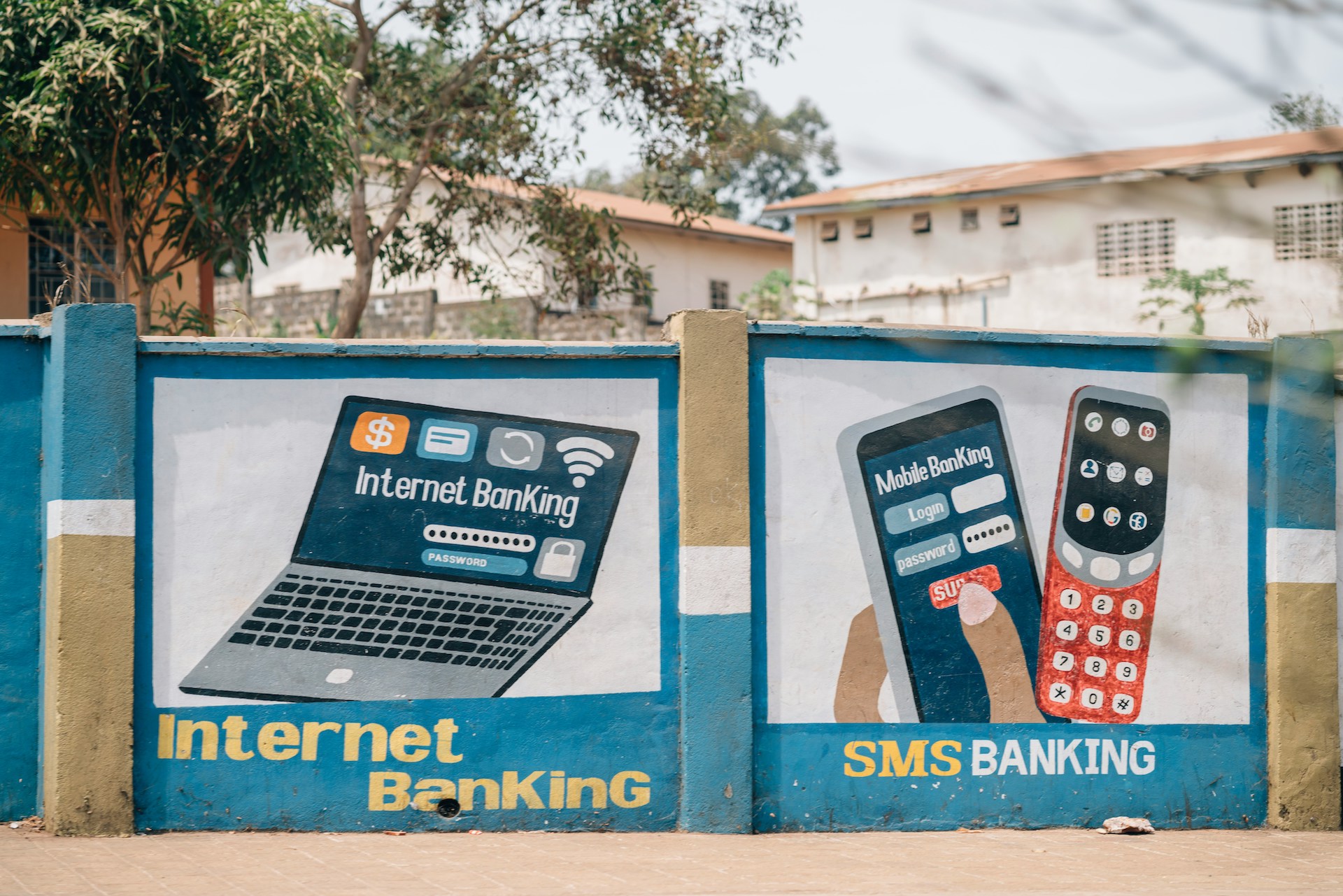
  • Digital Banking 2.0: How Tech Protects Your Capital

    Digital Banking 2.0: How Tech Protects Your Capital

    Banking moves fast these days. Five years back, unlocking your phone with your face seemed like sci-fi stuff. Now it’s boring, standard kit. Most banking operations in developed markets now take place through digital channels, and the trend continues upward. At the same time, hackers are pulling off heists worth billions from customer accounts globally.

    Financial institutions pour money into security tech that stays one step ahead. This isn’t about antivirus software or complicated passwords anymore. Modern Digital Banking 2.0 runs on artificial intelligence, blockchain, and quantum encryption. This article explores how technology actually protects user capital, which solutions already work in leading banks, and what’s still in the testing phase. 

    The security approach has completely changed

    A decade ago, protecting your bank account meant a simple setup: username, password, maybe an SMS code. Banks relied on perimeter security — powerful firewalls around their servers, hoping that would do the job. Reality hit harder: criminals learned to bypass SMS codes through SIM swaps, and password leaks became routine.

    Today’s financial institutions use layered approaches where every transaction gets analyzed in real time. Major market players implement comprehensive IT solutions for financial services that combine machine learning, behavioral analysis, and biometrics into one ecosystem. Companies like DXC Technology help banks build architectures that spot suspicious activity before money leaves the account.

    The core principle of Digital Banking 2.0 is zero trust architecture. No action is considered safe by default, even after successful authentication. The system constantly verifies transaction context: location, device, time of day, transfer amount. Anything looks off — additional checks kick in automatically.

    Next-generation biometrics

    Touch ID and Face ID became commonplace tools, but technology doesn’t stand still. Bank of America tests palm vein recognition — a method almost impossible to fake. Dutch bank ING experiments with voice analysis: the system recognizes not just timbre but speech patterns, intonation, emotional state.

    British bank Barclays launched a pilot project with gait recognition. AI analyzes how someone holds their phone while walking, the angle of body tilt, movement speed. Sounds like fantasy, but this method hits over 95% accuracy. The main advantage is passive authentication: users don’t even notice they’re being identified.

    Artificial intelligence against financial fraud

    Machine learning fundamentally changed fraud detection. Traditional rule-based systems worked on “if-then” logic: if amount exceeds $10,000 — block it, if country has high risk — check additionally. Fraudsters quickly learned to game these rules by splitting large sums into small transactions or using VPNs.

    Modern AI models analyze hundreds of parameters simultaneously and detect anomalies no human would ever spot. JPMorgan Chase uses a system called COiN (Contract Intelligence) that reviews legal documents faster than 360,000 hours of lawyer work. The same principle powers anti-fraud systems: algorithms study millions of transactions and find hidden fraud patterns.

    Mastercard implemented Decision Intelligence — a platform processing over 75 billion transactions yearly. The system accounts for not just payment details but individual user behavior history, merchant profiles, geolocation data. According to the company, fraud detection accuracy jumped 300%, while false positives (when legitimate operations get blocked) dropped by half.

    Behavioral analysis as invisible shield

    Every user has a unique digital fingerprint. Someone always checks balance at 8 AM, another shops mainly on weekends. Some type PIN codes fast and confidently, others slowly with pauses. BioCatch, an Israeli startup working with HSBC and Barclays, created a system tracking over 2,000 behavioral parameters.

    The algorithm analyzes:

    • Typing speed and characteristic pauses between keystrokes
    • Mouse cursor trajectory or swipes on touchscreens
    • Typical mistakes when entering data and correction speed
    • Smartphone tilt angle during use
    • Finger pressure on screen (on devices with appropriate sensors)

    When someone gains access to another person’s account, they physically can’t replicate all these nuances. The system registers the mismatch and blocks the operation or demands additional verification. Method effectiveness is proven in practice: banks using behavioral analysis see successful cyberattack rates drop 50-70%.

    Blockchain: not just about cryptocurrencies

    Distributed ledgers often get associated exclusively with Bitcoin and Ethereum, but the financial industry found much wider applications. Santander uses blockchain for international transfers — transactions that previously took 3-5 days now complete in hours. Fees dropped by roughly 40%.

    Australia and New Zealand Banking Group (ANZ) experiments with asset tokenization. Real estate, stocks, even art pieces transform into digital tokens that can be quickly and securely transferred between deal participants. Every operation gets recorded in an immutable distributed ledger, eliminating manipulation possibilities.

    Smart contracts in insurance and lending

    AXA launched a product called fizzy — flight insurance based on smart contracts. If a flight delays more than two hours, compensation automatically credits to the client’s account. No claims, no support calls — conditions written in code execute without question.

    Similar approaches get tested in lending. When borrowers meet all obligations on time, smart contracts automatically reduce interest rates. Payment delay appears — penalty gets charged. Total transparency, zero corruption, minimal operational costs.

    Quantum encryption: preparing for tomorrow

    Quantum computers approach commercial use, creating serious threats to existing encryption methods. RSA and ECC, which underpin modern internet banking security, could be cracked by powerful quantum processors in minutes. The US National Institute of Standards and Technology (NIST) already approved the first post-quantum cryptographic algorithms.

    Leading banks don’t wait for quantum threats to materialize. Bank of America and Visa fund quantum-resistant encryption research. Toshiba together with BNP Paribas tested quantum key distribution (QKD) — a method where any information interception attempt automatically gets detected at the physical level.

    In Switzerland, ID Quantique created a commercial quantum encryption system for financial institutions. Some private banks already use the technology to protect especially valuable client data. The solution costs remain high, but experts predict mass adoption within 5-7 years.

    API security and open banking

    European directive PSD2 forced banks to open APIs to third-party developers. This sparked fintech ecosystems: one app can aggregate accounts from different banks, automatically pay bills, invest free funds. Convenient but risky — every API request is a potential vulnerability point.

    Revolut, N26, Monzo built their infrastructure on API-first architecture. Protection operates on several levels:

    • OAuth 2.0 for authorization — third-party services never see user passwords
    • Rate limiting — request quantity restrictions to prevent DDoS attacks
    • API gateway with built-in anomaly monitoring
    • Encryption of all data in transit and at rest
    • Regular security audits from independent companies

    Open Banking created competition that benefited clients. Traditional banks must improve service and lower fees, or users simply switch to alternatives. Security levels don’t drop though — regulators strictly control all market participants.

    Real-time monitoring and automatic response

    The days when suspicious transactions got noticed hours or days later are gone. Modern systems analyze every operation the moment it executes. When algorithms detect something unusual — cards block instantly, and users receive push notifications asking to confirm or reject the payment.

    Capital One uses its own development called Eno — a virtual assistant working 24/7. The system doesn’t just block suspicious operations but proactively warns about potential risks. When clients enter card data on sites previously involved in phishing cases, Eno immediately sends warnings.

    Wells Fargo integrated Control Tower, letting clients set their own security rules. Users can prohibit transactions from certain geographic regions, limit amounts for online purchases, block ATM cash withdrawals abroad. Each user decides what control level they need.

    Collaborative fraud detection

    Banks started sharing fraud scheme information in real time. When one institution discovers a new attack type, data immediately flows to partners through secure channels. The early warning system created by the FinCrime Exchange consortium unites over 200 financial organizations across 40 countries.

    Visa uses a similar approach through Advanced Authorization. When fraudsters compromise a card and attempt using it, information instantly spreads across the entire network. Even when clients haven’t noticed problems yet, their cards are already blocked at merchant locations worldwide.

    Cloud security and distributed infrastructure

    Cloud migration initially raised security concerns, but practice proved otherwise. Amazon Web Services, Microsoft Azure and Google Cloud invest billions in data protection — far more than individual banks can afford. Data centers located across different continents guarantee uninterrupted operation even during massive disasters.

    Goldman Sachs completely moved its trading platform to Google cloud. Results — operation processing speed tripled, infrastructure maintenance costs dropped 40%. All data gets encrypted using AES-256 standard, while access controls through multi-level identification systems.

    DBS Bank from Singapore created a hybrid model: critical data stored in private clouds, less sensitive material in public ones. This architecture balances security and scalability. The bank can quickly launch new services without worrying about hardware.

    User education: the human factor remains

    Even the most sophisticated technologies are helpless when clients personally give fraudsters account access. Social engineering remains the most effective hacking method: criminals call, pretend to be bank employees, and persuade people to reveal CVV codes or one-time passwords.

    Santander UK launched a campaign using deepfake technologies. The bank created videos where celebrities seemingly promoted fake investment schemes. Then revealed these were forgeries and explained how to recognize similar scams. The initiative sparked attention and raised client awareness.

    HSBC developed an interactive phishing attack simulator. Users receive emails imitating bank messages and try determining which are real and which aren’t. Every mistake comes with detailed explanations about how fraudsters manipulate attention. This gamified approach proved far more effective than traditional brochures.

    Regulatory requirements and compliance

    Financial regulators worldwide tighten cybersecurity requirements. European GDPR, American CCPA, Singaporean PDPA — all these regulations force banks to more carefully protect client personal data. Violation fines measure in millions, while reputational losses can prove fatal.

    The Basel Committee on Banking Supervision published principles for operational risk management, including cyber threats. Banks must conduct regular pentests, train personnel in information security basics, develop incident response plans. Compliance is no longer a formality but critical necessity.

    Monetary Authority of Singapore introduced Technology Risk Management Guidelines requiring financial institutions to verify security not just of their own systems but all suppliers and partners. When cloud providers or payment gateway developers have vulnerabilities, banks bear responsibility.

    What awaits Digital Banking in coming years

    Decentralized Finance (DeFi) gradually integrates into traditional banking. JPMorgan created its own stablecoin JPM Coin for instant settlements between corporate clients. Société Générale issued bonds on Ethereum blockchain. The boundary between centralized and decentralized finance blurs.

    Artificial intelligence evolves from reactive to proactive. Instead of waiting for incidents to happen, systems will forecast potential threats weeks ahead. Federated learning will let banks train joint AI models without exchanging confidential data — each participant improves algorithms locally, then synchronizes only model parameters.

    Biometric cards with built-in fingerprint sensors are already produced by Thales and Idemia. Even when cards get stolen, they become unusable without owner biometrics. Visa and Mastercard test such solutions in Europe and Asia, with mass adoption expected by 2026.

    Digital banking moves toward a model where security causes no discomfort. Verification happens passively, invisibly to users. No endless captchas, SMS codes and security questions — systems identify people through hundreds of parameters impossible to fake. Technologies protect capital more reliably than ever before, making financial services simultaneously safer and more convenient.